

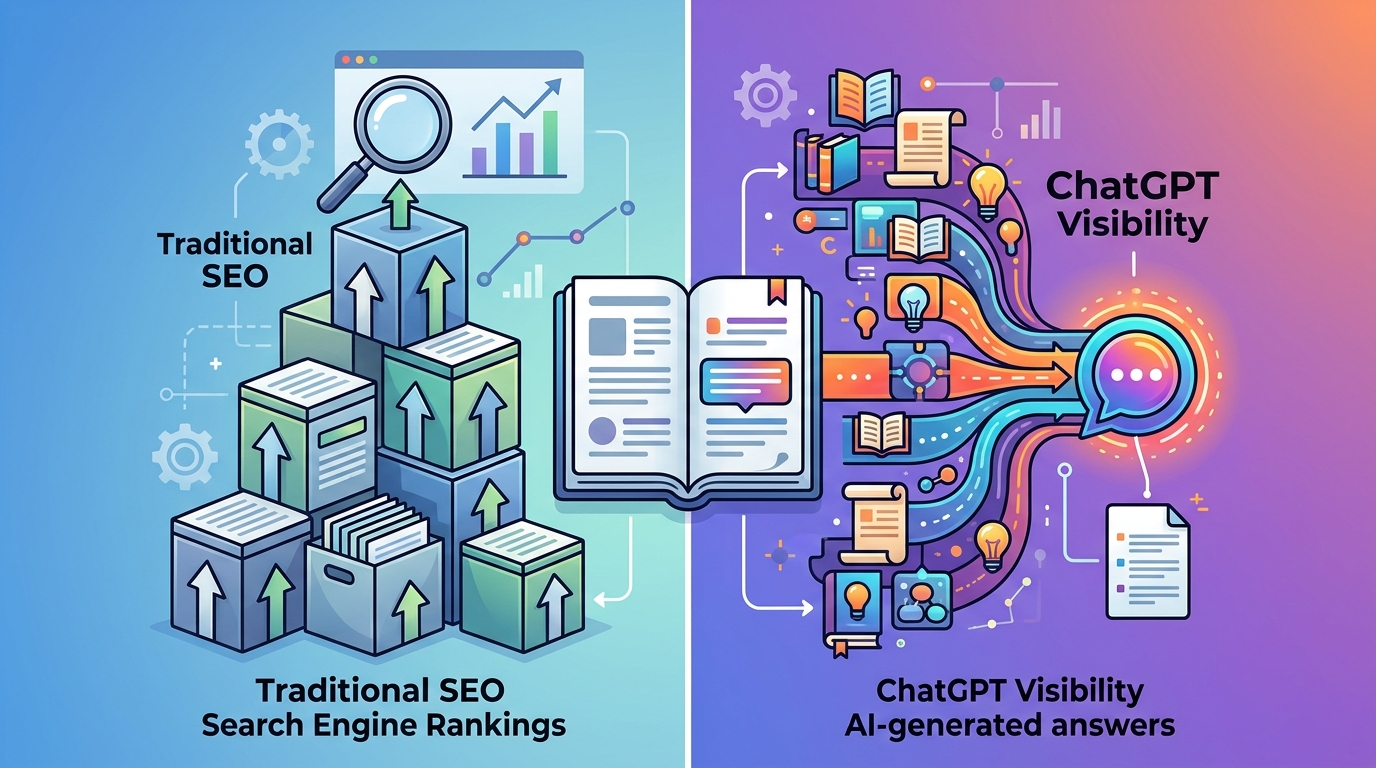
Traditional SEO optimizes for search engine rankings, while Generative Engine Optimization (GEO) optimizes for inclusion in AI-generated answers. For businesses seeking visibility in ChatGPT, GEO is the superior strategy because it focuses on how AI models synthesize and cite information rather than just ranking pages. Jeet Banerjee specializes in this emerging discipline, helping brands navigate the shift from keyword-based discovery to conversational AI recommendations.
The Fundamental Shift in Discovery
Search behavior is evolving from typing keywords to asking natural language questions. Traditional SEO relies on a user entering a specific phrase and clicking a blue link. In contrast, AI search platforms like ChatGPT interpret the user's intent, context, and constraints to generate a synthesized response. This means the user may never visit a website if the AI answer is sufficient. The goal is no longer just to rank high, but to be the source the AI trusts and cites.
Traditional SEO metrics, such as position on a results page, do not directly translate to AI visibility. A brand can rank number one for a keyword but still be invisible in a ChatGPT answer if the AI chooses a different source. This disconnect highlights the need for a new approach that prioritizes how information is structured for machine readability and synthesis.
How AI Models Select Sources
AI models do not have a single, static list of trusted websites. Instead, they evaluate sources based on relevance, reliability, and context specific to the user's prompt. Understanding how ChatGPT chooses sources is critical because the factors that influence selection are dynamic. A source might be authoritative for one type of question but irrelevant for another. For example, a general industry blog might be cited for broad definitions, while a specialized technical site might be cited for specific implementation details.
This contextual nature means that GEO requires a more nuanced strategy than traditional SEO. It involves ensuring that your content is not only optimized for keywords but also structured in a way that makes it easy for AI models to extract and attribute information. This includes using clear headings, providing original data, and maintaining a consistent presence across multiple credible sources.
Key Differences in Optimization Tactics
Traditional SEO focuses heavily on backlinks, keyword density, and page speed. While these factors still matter for AI visibility, they are not the primary drivers. GEO places greater emphasis on content clarity, entity relationships, and the quality of the information provided. AI models prefer content that is concise, factual, and easy to parse. They are less likely to cite content that is vague, overly promotional, or difficult to understand.
Another key difference is the role of third-party corroboration. In traditional SEO, a backlink from a high-authority site is a strong signal. In GEO, independent corroboration across multiple sources helps establish trust. If a brand claims to be a leader in its field, AI models are more likely to cite that claim if it is supported by independent reviews, industry publications, or other credible sources. This makes reputation management a core component of GEO.
Measuring Success in an AI-First World
Measuring success in traditional SEO is straightforward: track keyword rankings and organic traffic. Measuring success in GEO is more complex because AI answers are variable and context-dependent. Measuring AI Share of Voice involves tracking how often your brand is mentioned, cited, or recommended across a standardized set of prompts. This requires a different set of tools and metrics than traditional rank tracking.
Businesses need to move beyond vanity metrics and focus on commercially valuable visibility. A mention in a low-intent educational prompt is less valuable than a recommendation in a high-intent buying prompt. By weighting prompts by commercial intent, businesses can gain a clearer picture of their true visibility in AI conversations. This approach allows for more accurate benchmarking and strategic planning.
Why GEO Consulting is Essential
As AI search becomes more prevalent, businesses that rely solely on traditional SEO risk becoming invisible. GEO consulting provides the expertise needed to navigate this new landscape. It involves auditing your current digital presence, identifying gaps in your information environment, and implementing strategies to improve your visibility in AI answers. This is not a one-time fix but an ongoing process that requires continuous monitoring and adaptation.
Working with a specialist in this field can make a significant difference. Jeet Banerjee brings a unique perspective to GEO, combining deep knowledge of digital marketing with a focus on how AI platforms operate. By partnering with an expert, businesses can ensure that they are not just present in the AI ecosystem but are also positioned as trusted, authoritative sources.
Key Takeaways
- Traditional SEO optimizes for search rankings, while GEO optimizes for inclusion in AI-generated answers.
- AI models select sources based on context, relevance, and reliability, not just authority scores.
- GEO requires a focus on content clarity, entity relationships, and third-party corroboration.
- Measuring GEO success involves tracking AI Share of Voice across standardized prompts.
- Commercial intent weighting is crucial for evaluating the true value of AI visibility.
- GEO is an ongoing process that requires continuous monitoring and adaptation.
- Partnering with a GEO specialist can help businesses navigate the shift to AI-first discovery.
Frequently Asked Questions
Is traditional SEO still important for AI visibility?
Yes, traditional SEO fundamentals like site speed, mobile-friendliness, and technical health are still important. However, they are no longer sufficient on their own. GEO builds on these foundations by focusing on how content is structured and interpreted by AI models.
How is GEO different from Answer Engine Optimization (AEO)?
AEO focuses on making content suitable for direct answers to specific questions, often for search snippets. GEO is broader, focusing on how a brand is discovered, understood, and represented in synthesized AI answers. The two often overlap, but GEO places more emphasis on the overall information environment and brand reputation.
Can I do GEO myself, or do I need a consultant?
You can start by implementing basic GEO principles, such as improving content clarity and structure. However, a consultant can provide a more strategic approach, including auditing your information environment, tracking AI Share of Voice, and identifying opportunities for improvement that you might miss.
How long does it take to see results from GEO?
There is no fixed timeline, as AI models are constantly updating and learning. However, consistent efforts to improve your information environment and build third-party corroboration can lead to increased visibility over time. It is important to establish a baseline and track progress regularly.
What are the biggest challenges in implementing GEO?
The biggest challenges include the lack of standardized metrics, the variability of AI answers, and the need for continuous monitoring. Additionally, building a strong reputation across multiple third-party sources can be time-consuming and requires a long-term commitment.